How the Community Hall Became a Shared Civic Space
Community hall history comes alive through the choices that make a local room legible, welcoming and useful to groups beyond its regular users.
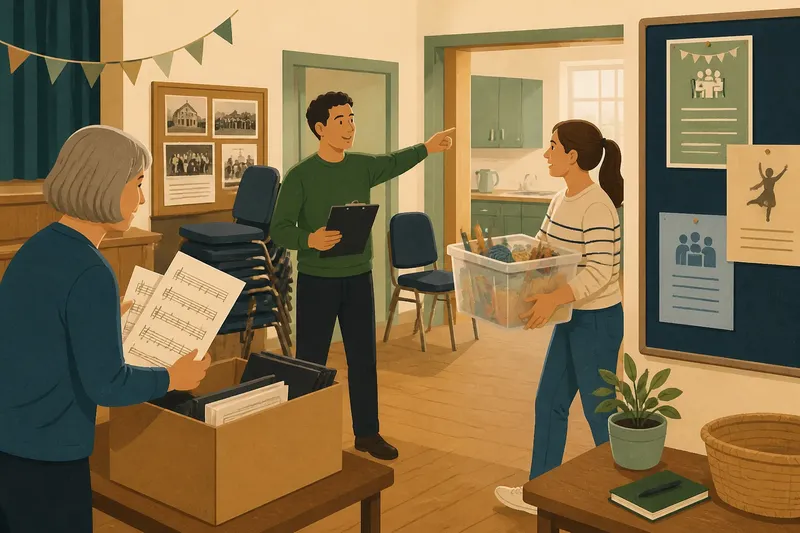
A choir is packing away its music when the next group arrives with a box of craft supplies. Someone checks the booking sheet, shifts a row of chairs and points the newcomers towards the kitchen. Community hall history is visible in these small handovers: a room becomes shared civic space through repeated use and the arrangements that let different people take part.
Community hall history starts with practical places to meet
There is no single origin story for community halls. In a particular town or village, people may have met in a schoolroom, a chapel vestry, an inn, a workplace room or another available building. Which spaces were used, and who could enter them, depended on local circumstances. Without records for a specific place, it is better to treat these as possible settings than as a universal path by which halls began.
A local history group looking into one hall can start with its own evidence: old minute books, deeds, photographs, newspaper notices and conversations with people who remember its earlier uses. Such records may explain whether a congregation, association, committee, public body or individual helped establish the building. They can also show how its purpose and access arrangements changed.
A room set aside for shared activity could meet needs that were awkward to fit into borrowed premises. Groups might want a regular meeting place, somewhere to keep equipment, or a venue that could be arranged for a class or performance. A dedicated hall did not necessarily belong to one group in daily use; its rules and ownership determined how widely it could serve.
Local groups shared halls for more than one purpose
A reliable venue could support clubs, classes, performances, meetings and social occasions. A kitchen might make refreshments possible, while a stage could suit a play or speech. An open floor with movable chairs and tables could be reset for a dance, a lesson or a community meal.
These features mattered because they let a single room accommodate activities with different needs. Yet flexibility took work. Users had to move furniture, clear away equipment and leave the space ready for the next booking. A hall’s calendar depended not only on the room itself but also on the people who coordinated its use.
The civic role of a hall was never automatic. A meeting room might give residents a place to discuss local concerns, but who set the agenda, received invitations and could afford or manage to attend shaped whose views were heard. A familiar address could make gathering easier; it could not, by itself, make participation open.
Layout and everyday information shaped the welcome
Movable chairs, a clear entrance and useful noticeboards could help a building accommodate varied activities. A fixed arrangement might suit one regular use while making another uncomfortable. The choice of furniture and storage therefore affected how readily users could prepare the room and share it in turn.
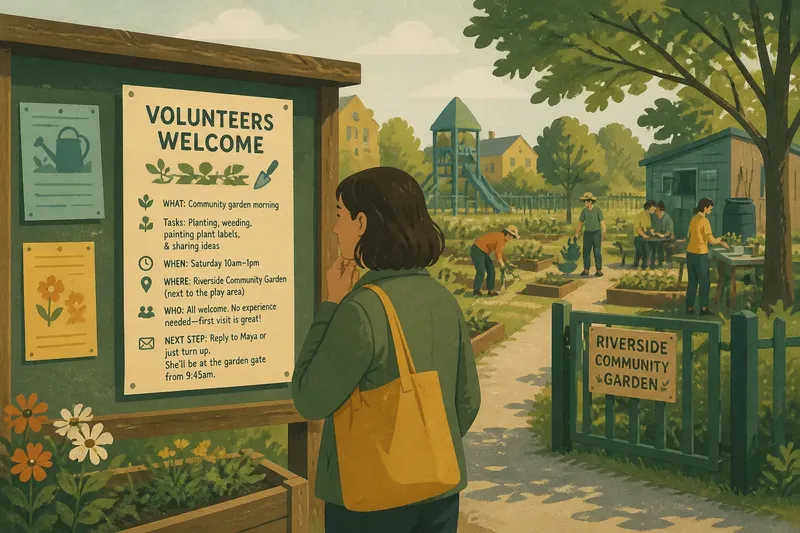
Information at the entrance connected the hall to people passing outside. A notice naming an activity, its organiser and a way to enquire was more useful than a vague announcement. Clear booking details could also help someone approach the hall without already knowing a committee member.
A shared hall is a little like a kitchen table: ordinary furniture becomes useful because different people can gather around it. The comparison only goes so far. A building needs caretaking, agreed arrangements and attention to access, while a table can simply be moved aside.
Shared use depends on clear decisions and care
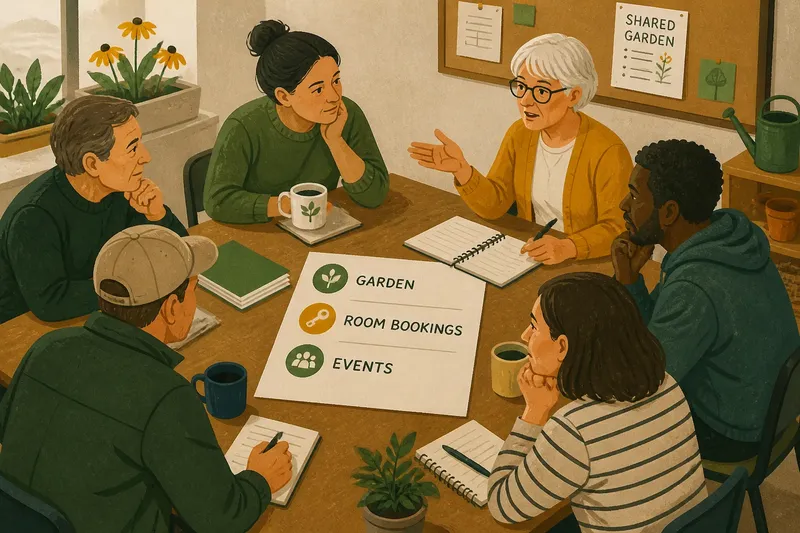
Every shared room involves decisions about dates, keys, cleaning, storage and permitted activities. These may be handled by a committee, trustees, a local authority, a caretaker or another responsible body. The exact arrangement varies, so anyone planning an event should check with the hall’s owner or manager and consult relevant local rules where necessary.
Imagine a village hall where a residents’ discussion, dance class and fundraising supper appear on the noticeboard. The committee notices that the board gives event names but no contact details. It adds a booking email, a short note explaining how enquiries are considered and space for new notices. The expected result is straightforward: a person unfamiliar with the regular groups can see how to ask about using the room, though that does not mean a booking will be available.
What should you look for in a local hall?
How can someone find out who manages a hall?
Look for a named committee, owner or booking contact on the entrance noticeboard or the hall’s own information page. If those details are missing, ask a local council or community organisation which body is responsible.
What makes a hall welcoming to new groups?
Useful signs include clear information about how to enquire, visible opening arrangements and a route for asking about activities or access needs. A friendly notice is helpful, but the booking process and the room’s practical arrangements matter too.
How can a group check whether a room suits its activity?
Ask the manager about the permitted use, available furniture, storage, kitchen access and any building restrictions relevant to the planned activity. If an essential feature is unavailable, the group can adapt its plan or ask about another space.
What records can explain a hall’s local history?
Minute books, ownership documents, photographs, event programmes and local newspaper archives can offer clues about a building’s past. Compare dates and accounts rather than treating a single recollection as a complete history.
Use a simple checklist to assess the hall’s shared offer
- Check whether the entrance names a contact; if it does, use that route to enquire, and if it does not, ask the owner or local council for the responsible body.
- Check whether booking information explains how requests are handled; if it does, follow those instructions, and if it does not, ask the manager what information a group should provide.
- Check whether the room’s stated uses fit the planned activity; if they do, ask about available dates, and if they do not, revise the activity or seek permission before proceeding.
- Check whether furniture and equipment can be moved or stored as needed; if they can, agree who will reset the room, and if they cannot, choose an arrangement that fits the fixed layout.
- Check whether access information addresses the needs of the people expected to attend; if it does, share it with invitees, and if it does not, ask the manager about suitable adjustments or alternatives.
- Check whether users are told how to leave the space after an event; if they are, assign those tasks to named helpers, and if they are not, ask the manager for the closing and cleaning arrangements.
These checks are about making the offer understandable, not judging a hall by the number of bookings it receives. A quieter calendar may still serve its regular users well; a busy one may leave new groups unsure how to join.
Community halls change as local needs change
A hall’s role can shift as other venues and services become available, or as residents’ schedules and interests change. One building may add new activities alongside established clubs; another may have fewer bookings or difficulty finding people to manage its affairs. Those differences are best understood through local records and conversations, rather than assumed to follow one broad historical pattern.
Imagine a residents’ group considering a hall for a monthly discussion. Its starting information is a noticeboard with no booking contact, a room whose tables can be rearranged, and a listed caretaker. The group asks the caretaker who handles requests and learns that the committee reviews proposals; it then sends a short description of the activity and asks about dates. If the room and terms suit the group, it can request a booking; if the available arrangements do not fit, it can revise the plan or look elsewhere. The result is a clear decision based on the hall’s actual process, not an assumption that every community space operates alike.
Keep local hall history grounded in local evidence
Community hall history is most useful when it connects a building’s documented past with the choices that shape its shared use now. Old photographs and records can show what a hall has hosted, while present-day notices, booking arrangements and care routines reveal who can approach it today.
For anyone exploring a particular hall, a small next step is to ask where its records are kept and who can explain the current arrangements. That conversation can preserve a local account while making the room’s present-day route into community life easier to see.